the history behind the novel
The Engineers' Counter-Attack, 27 May 1940
On the evening of 27 May 1940, with the British Expeditionary Force close to collapse at the Ypres-Comines Canal, three field companies of Royal Engineers, the 7th, 59th and 225th, were ordered forward as infantry to close a gap torn in the line. Around 300 Sappers went in at about seven o'clock, alongside a few Black Watch and dismounted 13th/18th Royal Hussars, with no artillery and no heavy weapons. They fixed bayonets and attacked in the last of the daylight. The 59th's commanding officer, Major MacDonald, was mortally wounded in the first minutes. Roughly sixty men were killed, wounded or missing. But the Sappers caught the German flank and bought the hours that held the corridor to Dunkirk open.
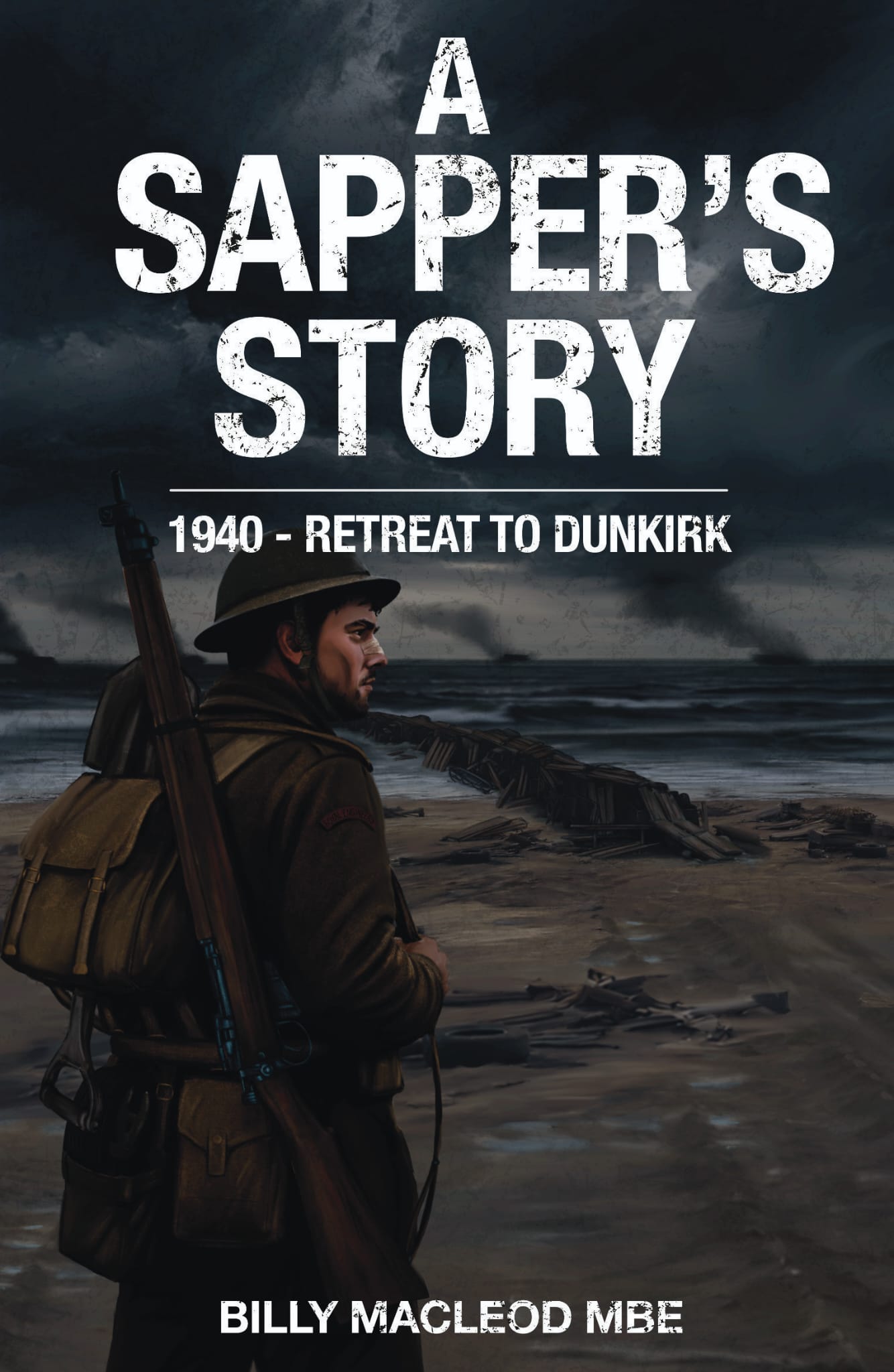
At the top, it barely registered. Major-General Franklyn recorded only that a "few engineers were collected from somewhere and off they went about 7.00pm." That same night, Lieutenant-General Alan Brooke wrote in his diary that "nothing but a miracle" could save the BEF. The miracle, in part, was these men. Their stand is the heart of A Sapper's Story - 1940 - Retreat to Dunkirk, the first novel in the series.
Sources: Jerry Murland, The Battle of the Ypres-Comines Canal 1940; Maj-Gen R.P. Pakenham-Walsh, History of the Corps of Royal Engineers Vol. VIII; T.M.J. Riordan MM, The History of 7 Field Company RE 1939-1946. Franklyn quoted in Murland; Brooke from his diary of 27 May 1940.